


All About PRP Effectiveness for Hair Density
September 15, 2026
Does PRP Improve Hair Density?
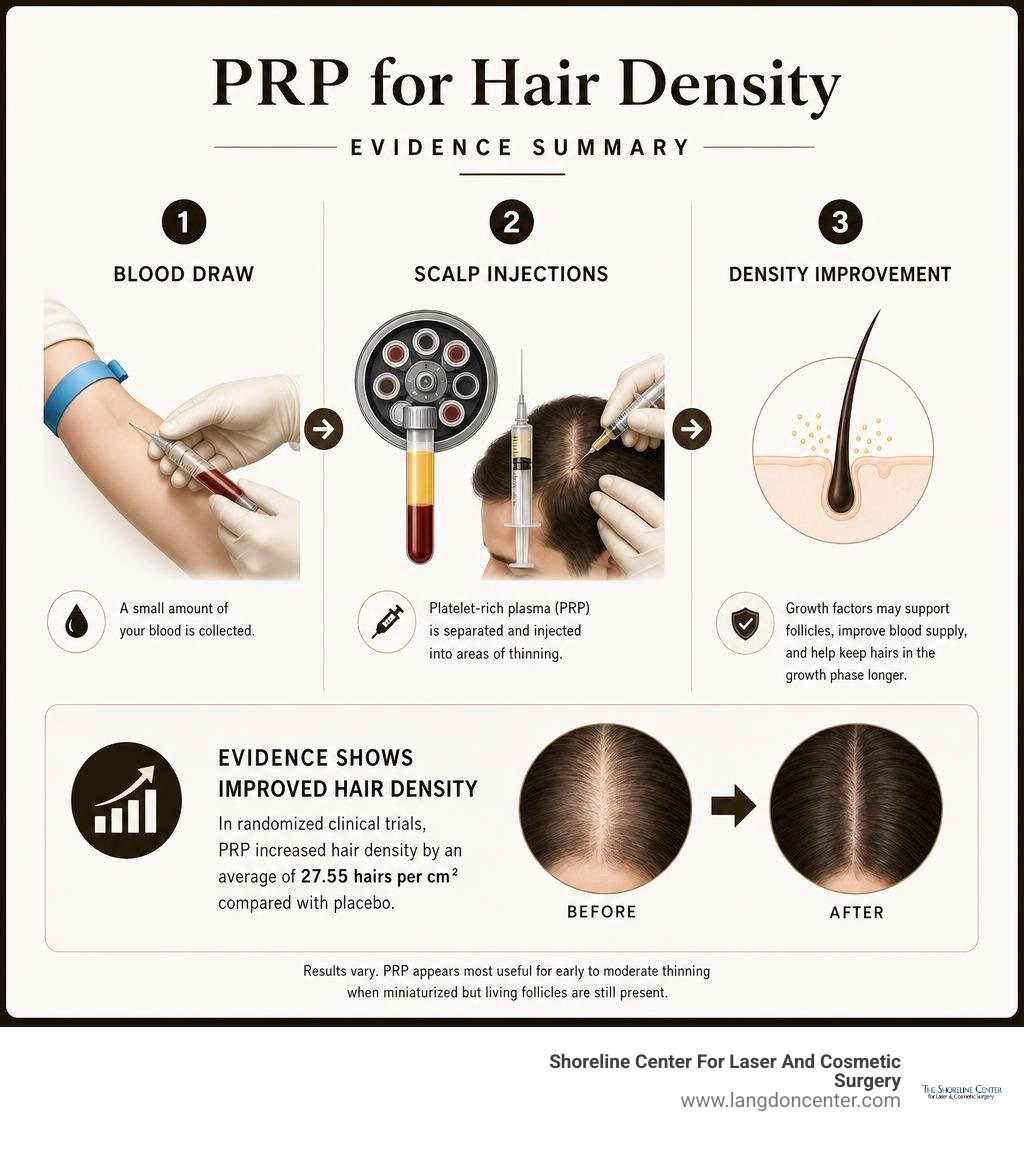
PRP for hair density can improve hair counts in people with androgenetic alopecia, but results vary. In randomized clinical trials, PRP increased hair density by an average of 27.55 hairs per cm2 compared with placebo. It appears most useful for early to moderate thinning, when miniaturized but living follicles are still present.
PRP uses a small sample of your own blood. The platelet-rich portion is separated, then injected into areas of thinning. Platelets release growth factors that may support follicle cells, improve blood supply around follicles, and help keep hairs in the active growth phase longer.
The evidence is encouraging, not final. Studies use different PRP devices, platelet concentrations, injection schedules, and comparison methods. This makes results hard to predict for any one person. PRP may be an option on its own, but it is often considered alongside proven treatments such as topical minoxidil, depending on the cause and stage of hair loss.
I am Dr. Joseph Sarhan, a Yale-trained, board-certified dermatologist with MD and PhD training and specialized experience in hair loss and minimally invasive cosmetic dermatology. In this guide, I will help you understand what current research on PRP for hair density can, and cannot, tell us about your treatment options.
How PRP May Help Thinning Hair
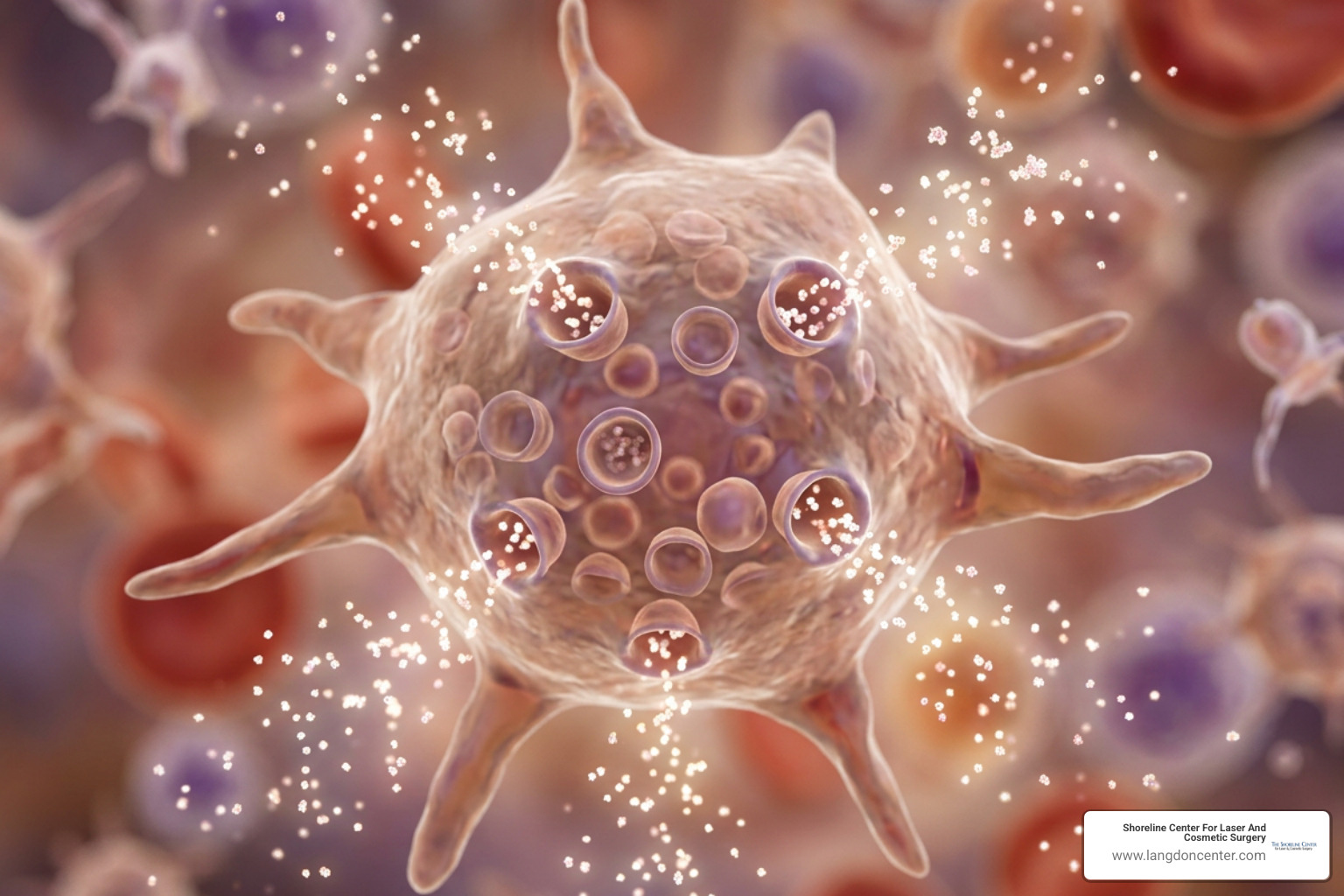
Hair thinning often happens when follicles gradually shrink and spend less time in the active growth phase. PRP is designed to support follicles that are still alive but producing finer, weaker hairs.
During treatment, a small amount of blood is drawn and processed so the platelet-rich portion can be injected into thinning areas of the scalp. Platelets naturally contain growth signals involved in repair and healing. In plain terms, PRP may help improve the environment around the follicle, encourage healthier growth activity, and support thicker-looking hair over time.
The key point is that PRP is not a cure for every type of hair loss. It tends to work best when thinning is early to moderate and the follicles still have the ability to respond. A consultation helps determine whether PRP, medication, surgery, or a combined plan is the best fit.
Why Preparation Still Matters
Not all PRP treatments are prepared the same way. The equipment, platelet concentration, and injection plan can vary from one practice to another, which is one reason results are not identical for every patient.
For patients, the takeaway is simple: PRP should be performed by an experienced medical team that understands hair loss diagnosis, scalp anatomy, and appropriate treatment planning. A careful evaluation matters more than technical lab details. At Shoreline Center for Laser and Cosmetic Surgery, we focus on using PRP as part of a practical, individualized plan for improving hair density when a patient is a good candidate.
Treatment Modalities: Comparing Injections, Medical Therapy, and Surgery
Managing hair loss requires matching the correct treatment to the patient’s pattern, severity, and goals.

When asking am I a candidate for hair restoration with PRP?, follicle viability is the most crucial consideration. As shown in the study on the Efficacy of Platelet-rich Plasma for Varying Alopecia Grades, patients with early to moderate hair loss (Norwood-Hamilton stages II through IV in men, and Ludwig stages I to II in women) experience the best clinical outcomes. When areas have been completely bare for years, the follicular ostia fibrose, meaning injectable biological signals no longer have viable target cells to stimulate.
Men and women also experience pattern thinning differently:
- Male Pattern Hair Loss: Men often present with localized bitemporal recession and vertex thinning. Male-only cohorts in clinical trials showed an average density increase of 39.12 hairs/cm², responding well due to concentrated miniaturization in specific target zones.
- Female Pattern Thinning: Women generally experience diffuse thinning across the central part and crown with preservation of the frontal hairline. Mixed-gender and female cohorts achieved reliable density increases, and female patients often express high procedural satisfaction because PRP provides a non-hormonal, non-surgical treatment path.
Combining Medical Therapies with PRP for Hair Density
PRP works exceptionally well alongside traditional pharmaceutical therapies. While oral finasteride suppresses systemic DHT conversion and topical minoxidil acts as an active potassium-channel opener, autologous plasma supplies concentrated cellular growth factors.
According to a systematic review examining the additive value of platelet-rich plasma to topical minoxidil, combining monthly PRP injections with daily 5% minoxidil outperformed minoxidil monotherapy across all measured timepoints:
- 1 Month: Mean density increase of 11.07 hairs/cm² over monotherapy.
- 3 Months: Mean density increase of 21.81 hairs/cm² over monotherapy.
- 6 Months: Mean density increase of 17.80 hairs/cm² over monotherapy.
The combination creates synergistic vascularization in the scalp without elevating adverse event risks, making combined medical and regenerative therapy a strong frontline strategy.
Injectable Regeneration Versus Surgical Restoration
When evaluating an FUE hair transplant vs PRP hair restoration which is right for me?, it helps to view these treatments as complementary rather than competing options. Determining what is the best method for hair restoration? depends on whether you are looking to revitalize thinning native hairs or relocate healthy follicles to completely bare scalp regions.
An FUE hair transplant physically extracts individual donor follicular units from the dense occipital scalp and transplants them into balding areas. For patients with advanced hairline recession or smooth bald patches, surgical grafting remains the primary way to rebuild coverage.
However, injectable plasma plays an important role before, during, and after surgical restoration. Administering plasma around transplant procedures helps support graft survival, accelerates tissue healing, and strengthens existing native hairs surrounding the transplanted zones.
Frequently Asked Questions About Hair Restoration Injections
How quickly do patients notice visible improvements in hair thickness?
Hair follicle biological cycles operate on months rather than days. Most patients notice an initial reduction in excessive shedding after 60 to 90 days (typically following the second or third treatment). Measurable increases in hair count, caliber, and surface coverage appear between 4 and 6 months as newly activated anagen hairs grow past the skin surface. We track these milestones using serial high-resolution trichoscopy imaging.
Are autologous platelet scalp injections safe and well-tolerated?
Because PRP is prepared directly from your own blood, it carries an exceptional safety profile without risk of foreign-body rejection, allergic sensitization, or systemic toxicity. The most common side effects are mild and temporary:
- Localized tenderness or soreness for 24 to 48 hours.
- Mild redness or pinpoint bruising at injection sites (reported in roughly 21% of trial participants).
- Transient scalp tightness.
Patients with active blood coagulation disorders, severe thrombocytopenia, active scalp infections, or systemic scarring alopecias should not undergo PRP scalp therapy.
How many treatment sessions and maintenance boosters are typically required?
The standard clinical induction protocol consists of 3 to 4 initial treatment sessions spaced roughly 4 weeks apart. Because androgenetic hair loss is an ongoing progressive genetic process, newly stimulated follicles require ongoing maintenance.
Longitudinal studies demonstrate that treatment benefits remain stable for roughly 12 months, with minor density declines appearing between 12 and 16 months in some individuals if left unmaintained. To sustain density, we recommend a single maintenance booster session every 6 to 12 months.
Conclusion: Choosing the Right Hair Restoration Pathway
The scientific evidence confirms that autologous platelet therapy is a proven, biologically active option for increasing hair density, awakening miniaturized follicles, and improving strand caliber in early to moderate androgenetic alopecia. Success depends on proper patient selection, standardized preparation methods, and consistent long-term treatment planning.
At Shoreline Center for Laser and Cosmetic Surgery, we serve patients throughout Guilford, New Haven, Madison, Branford, and surrounding Connecticut communities. We focus on delivering careful, individualized care using minimally invasive, low-impact cosmetic techniques that produce natural results.
If you are noticing early hair thinning or want an objective evaluation of your scalp health, explore our specialized PRP Hair Restoration services. Contact our team today to schedule your private consultation, and let us help you build a personalized, evidence-based plan for lasting hair density.


