


An Essential Guide to Blepharoplasty: Your Questions Answered
September 2, 2026
What Is Blepharoplasty? Your Complete Guide to Eyelid Surgery
Blepharoplasty is a surgical procedure that removes or repositions excess skin, muscle, and fat around the eyelids to restore a more youthful, rested appearance or to improve vision blocked by sagging skin.
Here is a quick overview of what you need to know:
- What it treats: Drooping upper eyelids, under-eye bags, puffiness, excess skin, and lower eyelid laxity
- Who it’s for: Healthy adults, most commonly over age 40, with cosmetic or functional eyelid concerns
- Upper vs. lower: Upper eyelid surgery can last 5 to 7 years or a lifetime; lower eyelid surgery rarely needs to be repeated
- Functional vs. cosmetic: When sagging skin blocks your peripheral vision, the procedure may be covered by insurance
- Recovery: Most people feel comfortable going out in public within 10 to 14 days
- Pain level: Considered one of the least painful cosmetic procedures available
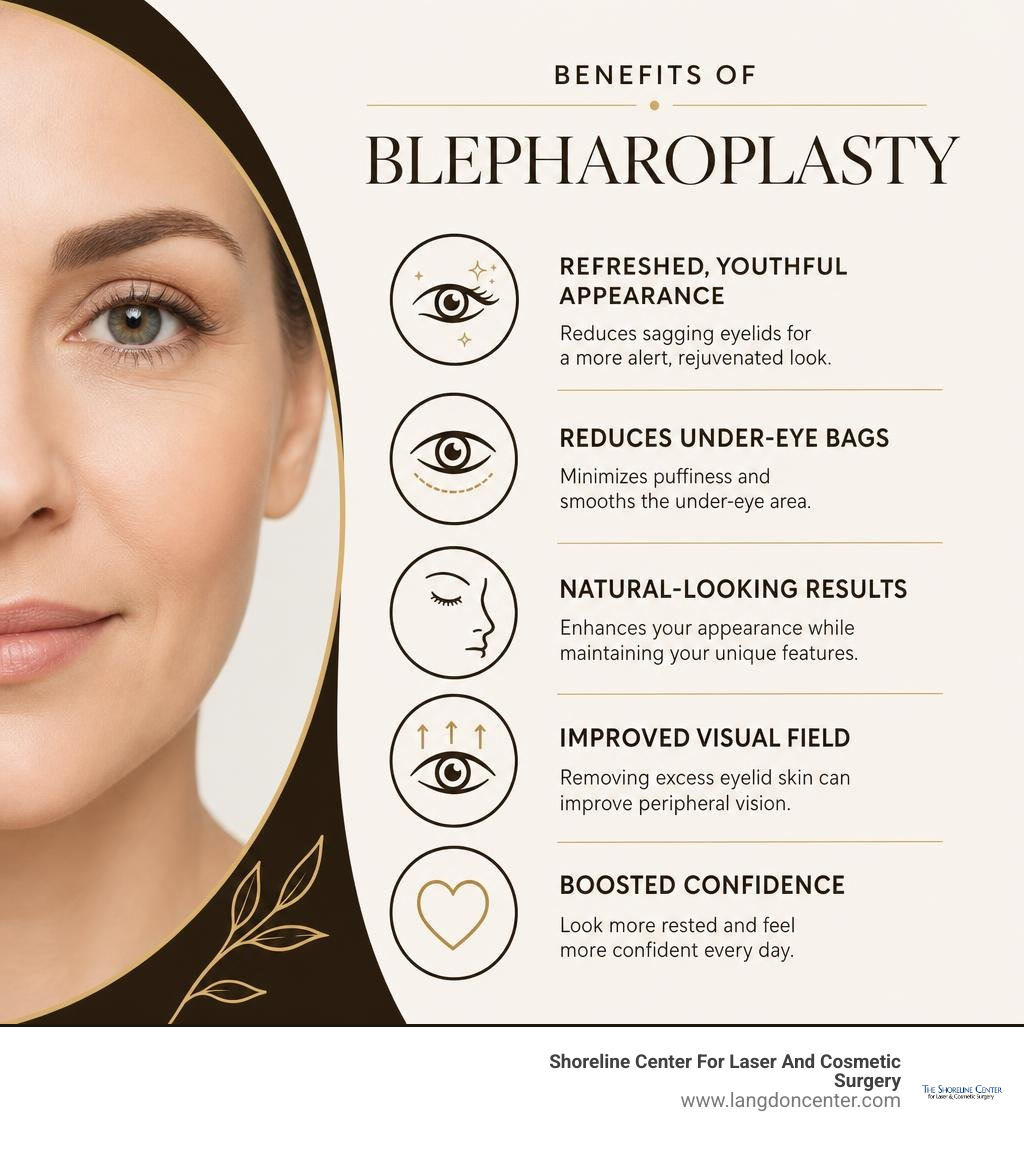
As we age, the skin around our eyes stretches and the muscles supporting the eyelids gradually weaken. This leads to drooping upper lids, puffiness, and under-eye bags that can make a person look tired or older than they feel. For some, the sagging becomes severe enough to physically block the upper and outer portions of their visual field, turning what starts as a cosmetic concern into a functional one.
Whether you are looking to refresh your appearance or restore your full field of vision, understanding the procedure from start to finish helps you make a confident, informed decision.
I’m Dr. Joseph Sarhan, a Yale-trained, board-certified dermatologist with specialized training in facial rejuvenation and minimally invasive cosmetic procedures, including blepharoplasty. My MD and PhD background, combined with my clinical experience as Chief of Resident Cosmetics at Yale Dermatology, gives me a precise, evidence-based approach to eyelid rejuvenation that prioritizes natural-looking results and patient safety.
What is Blepharoplasty and What Can It Treat?
To understand how we refresh tired-looking eyes, we must first look at what happens to our facial anatomy over time. The skin of the eyelid is the thinnest on the entire human body, making it highly susceptible to the natural aging process.
As the years pass, the structural proteins collagen and elastin break down. The delicate muscles that support your eyelids begin to weaken, and the protective fat pads around the eye globe start to bulge forward. This combination of events leads to several common concerns that we treat using What is blepharoplasty?:
- Dermatochalasis: This is the clinical term for loose, redundant, or sagging eyelid skin. It creates heavy folds on the upper lids and deep wrinkles on the lower lids.
- Preaponeurotic Fat Prolapse: When the orbital septum (the thin membrane holding fat in place) weakens, fat herniates forward. In the upper eyelids, this causes puffiness in the inner corners. In the lower eyelids, it creates stubborn under-eye bags.
- Drooping Lower Eyelids: Severe laxity can cause the lower eyelid to sag downward, sometimes revealing the white of the eye (sclera) below the iris.
- Chronic Eyelid Dermatitis: In some cases, redundant skin folds trap moisture and cause friction, leading to persistent skin irritation and rashes.
It is also helpful to distinguish dermatochalasis from a rare condition called blepharochalasis. While dermatochalasis is standard, age-related skin laxity, blepharochalasis is a rare genetic condition characterized by recurrent episodes of painless eyelid swelling in younger individuals, which eventually leaves the skin thin and stretched.
When patients ask us, Is eyelid lift same as blepharoplasty?, we explain that while the terms are often used interchangeably in casual conversation, a surgical “lift” specifically refers to the removal of tissue to reposition the eyelid. To explore how these changes impact your overall expression, you can read more about What do your eyes tell about you?.
For a complete clinical overview of how these structures are evaluated, you can consult the Blepharoplasty – Mayo Clinic reference page.
Cosmetic vs Functional Eyelid Rejuvenation
We categorize eyelid surgery into two primary types: cosmetic and functional. The distinction is highly important because it determines both the surgical goals and whether your health insurance will cover the cost.
- Cosmetic Blepharoplasty: This is performed to achieve aesthetic goals. Patients often feel that their eyes make them look exhausted, angry, or older than they feel. By removing excess skin and sculpting under-eye bags, we restore a bright, rested, and naturally refreshed appearance.
- Functional Blepharoplasty: This is medically necessary when severely sagging upper eyelid skin physically hangs over the eyelashes and blocks your upper or outer (peripheral) vision. This can make everyday activities like driving, reading, or using a computer difficult or dangerous.
To prove to insurance companies that a procedure is functional, patients must undergo formal visual field testing (both with the eyelids in their natural state and with the skin taped up) along with specialized medical photography. If the testing proves a significant visual obstruction, insurance may cover the upper eyelid surgery.
To learn more about treating heavy upper lids, you can read our guide on How can I improve droopy upper eyelids?, or view the general historical and surgical context of the procedure on Blepharoplasty.
Surgical Approaches for Upper and Lower Eyelid Rejuvenation
At Shoreline Center for Laser and Cosmetic Surgery, we specialize in low-impact, highly precise surgical techniques. One of our key philosophies is prioritizing patient safety and comfort by performing these procedures under local anesthesia rather than general anesthesia.
Using local anesthesia with light oral sedation completely avoids the risks, grogginess, and extended recovery times associated with being “put under.” Patients remain completely relaxed, pain-free, and awake during the procedure, and they are able to walk out of our clinic shortly after we finish. You can read our detailed breakdown on What kind of anesthesia is used during a blepharoplasty? to see why this approach is so beneficial.
Below is a comparison table outlining the key differences between traditional surgical approaches and modern laser-assisted options:
| Feature | Traditional Surgical Blepharoplasty | Laser-Assisted Blepharoplasty |
|---|---|---|
| Primary Tool | Surgical Scalpel | CO2 or Erbium Laser |
| Bleeding Risk | Moderate (requires manual cauterization) | Minimal (laser seals blood vessels instantly) |
| Swelling & Bruising | Moderate (typically resolves in 10 to 14 days) | Mild to Moderate (often resolves faster) |
| Precision | High (dependent on surgeon’s hand) | Extremely High (allows microscopic tissue layers) |
| Anesthesia | Local or General Anesthesia | Local Anesthesia |
| Scarring | Hidden in natural creases or inside the lid | Hidden in natural creases or inside the lid |
Upper Eyelid Blepharoplasty Techniques
The main goal of an upper blepharoplasty is to remove the heavy, overhanging hood of skin while maintaining a completely natural eye shape.
The procedure begins with highly detailed, precise markings. While you are sitting upright, we carefully measure the skin to ensure we leave at least 20 mm of vertical skin between your eyelid margin and your eyebrow. Preserving this minimum distance is absolutely critical to ensure that you can close your eyes completely after surgery.
Through this incision, we perform a conservative skin-only or muscle-sparing excision. By preserving the underlying orbicularis oculi muscle, we significantly reduce the risk of postoperative dry eye disease and maintain the natural blinking mechanism of your eyelids. If necessary, a small amount of protruding preaponeurotic fat is gently sculpted. The incision is then closed with ultra-fine sutures that are removed just a few days later.
For more technical details on upper lid anatomy, you can refer to the Upper Eyelid Blepharoplasty – EyeWiki resource, or explore our approach to achieving a Surgical face natural eyelid lift.
Lower Eyelid Blepharoplasty Techniques
Lower eyelid surgery is highly customized because under-eye aging presents differently in every patient. Some struggle with prominent, puffy bags, while others have deep, hollow grooves known as tear troughs.
To address these concerns, we use two primary surgical approaches:
- The Transconjunctival Incision: This is our preferred approach for patients who have under-eye bags but still have good skin elasticity. We make a tiny incision on the inside of the lower eyelid (the conjunctiva). This means there are absolutely no external incisions, no visible scars, and no external stitches. Through this internal window, we can easily access and sculpt the fat pads.
- The Transcutaneous Approach: This approach is used when a patient has significant excess, crepey skin under the eyes. The incision is made just a millimeter below the lower lash line (subciliary incision). It allows us to remove a conservative pinch of loose skin and tighten the underlying supportive tissues.
A major advancement in modern lower blepharoplasty is the shift from aggressive fat removal to fat preservation and repositioning. In the past, surgeons would simply cut out all the under-eye fat, which often left patients looking hollowed-out and even older a few years down the road.
Today, we gently move (transpose) the bulging fat into the adjacent tear trough. This acts as a natural, permanent filler, smoothing out the transition between the lower eyelid and the cheek.
To learn more about these methods, you can read the clinical literature on Lower Eyelid Blepharoplasty – StatPearls – NCBI Bookshelf. If you are trying to decide between surgical and non-surgical options for your under-eye area, explore our helpful guides on How can I remove bags under my eyes permanently? and Do I need fillers or surgery for my tear trough issue?.
Laser Eyelid Surgery Alternatives
For patients who want to address mild to moderate skin laxity without a traditional scalpel, laser technology offers an exceptional alternative.
Using a CO2 or Erbium laser allows us to perform high-precision skin resurfacing. The laser energy vaporizes microscopic layers of damaged skin while heating the deeper dermis, which triggers a powerful natural healing response and stimulates the production of fresh, tight collagen.
We often combine a transconjunctival lower blepharoplasty (which removes the deep fat bags from the inside) with laser skin resurfacing on the outside of the lower lid. This twin approach removes the puffiness and tightens the external skin without requiring a single external scalpel incision.
To find out if this approach fits your goals, read our articles on Can an eyelid lift be done without a scalpel?, What kind of laser can be used for an eyelid lift?, and the benefits of using an Erbium laser before filler for lower eyelids.
Preparing for Surgery and the Recovery Timeline
A smooth, comfortable recovery begins with proper preparation. During your initial consultation at our Connecticut office, we will review your complete medical history, including any history of dry eyes, glaucoma, thyroid disorders, or high blood pressure.
Here is what you need to do to prepare:
- Medication Adjustments: Stop taking aspirin, ibuprofen, naproxen, and any herbal supplements that increase bleeding risks for at least two weeks before your procedure.
- Smoking Cessation: Quit smoking several weeks before surgery, as nicotine constricts blood vessels and can significantly delay your healing.
- Arrange Transportation: Even though we use local anesthesia, you will need a trusted friend or family member to drive you home and stay with you for the first night.
For a comprehensive checklist of pre-operative guidelines, you can review the PE Cosmetic Eyelid Surgery patient brochure, and read our advice on How long is recovery from eyelid surgery?.
The Recovery Timeline and Milestones
While everyone heals at their own pace, having a general timeline helps you plan your social and work schedule.
- Days 1 to 3: This is the peak window for swelling and bruising. You should apply cold compresses or ice packs for 10 minutes every hour while awake. Sleep with your head elevated on a few pillows to help fluid drain away from your face.
- Days 5 to 7: Any external sutures are gently removed in our office. You will notice your swelling begin to decrease significantly.
- Days 10 to 14: Most bruising and major swelling will have subsided. Most patients feel completely comfortable returning to work and running errands without sunglasses.
- Weeks 2 to 4: You can typically resume wearing contact lenses (usually after 2 weeks) and gradually return to light exercise.
- 3 to 6 Months: The surgical scars will continue to soften, flatten, and fade into the natural creases of your eyelids until they are virtually invisible.
To learn more about what to expect, read our articles on How long is recovery from an eyelid lift? and How long does it take to recover from laser blepharoplasty?.
Risks and Potential Complications
While blepharoplasty is widely regarded as a safe, low-impact procedure, all surgical interventions carry some degree of risk. Choosing an experienced, board-certified specialist is the single most important factor in minimizing these complications.
Potential risks include:
- Temporary Dry Eyes: This is common during the first few weeks and is easily managed with lubricating eye drops and ointments.
- Lagophthalmos: This is a temporary difficulty in closing the eyes completely, which typically resolves as the tissue relaxes and swelling goes down.
- Asymmetry: Minor differences between the two eyes can occur, though we plan and measure meticulously to ensure balanced results.
- Infection or Bleeding: These are extremely rare, especially when following our detailed post-operative care instructions.
Frequently Asked Questions About Eyelid Rejuvenation
How long do the results of eyelid surgery last?
The longevity of your results depends on whether you have upper or lower eyelid surgery.
Upper eyelid surgery typically lasts anywhere from 5 to 7 years to an entire lifetime. While the surgery beautifully resets the clock, your skin will continue to age naturally over time. Lower eyelid surgery, on the other hand, rarely ever needs to be repeated because the fat pads we sculpt or reposition do not grow back. You can read more about what to expect long-term in our post, How long does an eyelid lift last?.
What is the average cost of the procedure?
The overall cost of a blepharoplasty varies based on whether you are treating the upper lids, lower lids, or both, as well as whether you choose to combine the surgery with laser skin resurfacing.
Because we perform our procedures under local anesthesia right here in our accredited office facility, our patients save significantly by avoiding expensive hospital operating room fees and general anesthesiologist fees. For more detailed information on pricing, please explore our guides on What is the average cost of an eyelid lift? and How much does blepharoplasty cost?.
How can I achieve natural looking results?
The key to achieving a beautiful, natural-looking result is a conservative, volume-preserving approach.
The goal of modern eyelid surgery is not to pull the skin as tight as possible, which can create a startled or “windblown” look. Instead, we focus on subtle, precise adjustments: conserving the essential blinking muscles, preserving and repositioning natural fat to avoid a hollow look, and respecting the unique, natural harmony of your face. To read more about our philosophy on this, check out our guide on How to obtain natural looking eyelift.
Conclusion
Your eyes are the focal point of your face, communicating your energy, emotions, and vitality to the world. If drooping eyelids or heavy under-eye bags are making you look tired or affecting your vision, blepharoplasty offers a safe, highly effective, and long-lasting solution.

At Shoreline Center for Laser and Cosmetic Surgery, we are proud to serve patients across Connecticut, including Guilford, New Haven, Madison, Branford, and Hartford. Our signature approach focuses on safer, low-impact procedures performed under local anesthesia. This ensures a quicker, more comfortable recovery and beautiful, natural-looking results that match how youthful you feel on the inside.
If you are ready to take the next step, we invite you to schedule a personal consultation with us. We will evaluate your unique anatomy, discuss your aesthetic goals, and create a customized treatment plan tailored just for you. To learn more or to request an appointment, visit our Surgical face blepharoplasty page today.


