


In Depth Guide to Breast Reduction: Procedure & Recovery
September 4, 2026
What Is Breast Reduction and Who Is It For?
Breast reduction surgery (also called reduction mammaplasty) is a procedure that removes excess fat, glandular tissue, and skin from the breasts to create a smaller, lighter, and better-proportioned chest.
Here is a quick overview of what you need to know:
| Topic | Key Facts |
|---|---|
| What it is | Surgical removal of excess breast tissue, fat, and skin |
| Who it’s for | People with large breasts causing physical pain or discomfort |
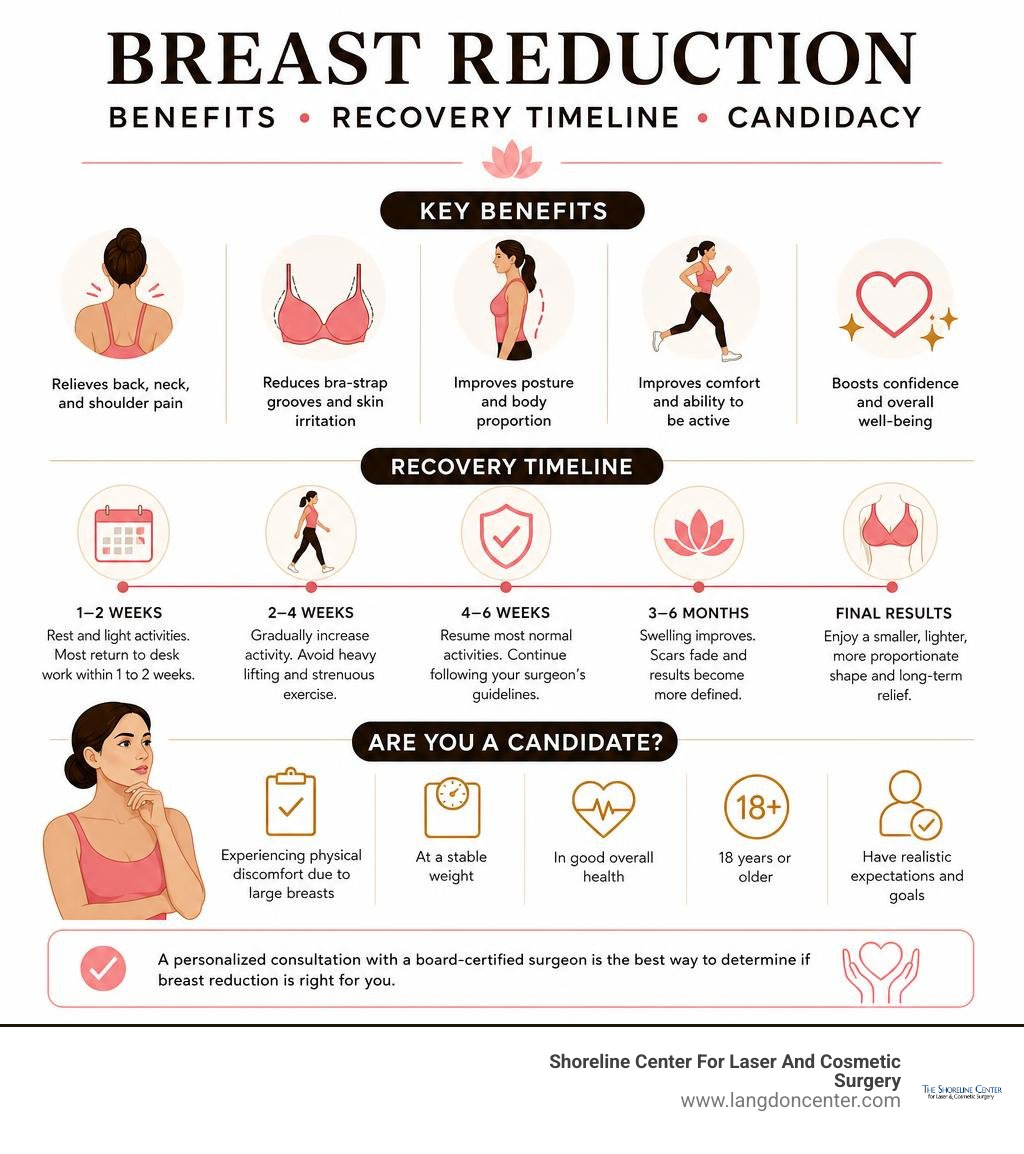
| Main benefits | Relieves back, neck, and shoulder pain; improves posture and body proportion |
| Procedure time | Typically 2 to 5 hours |
| Recovery | Limited activity for 4 to 6 weeks; most return to work in 1 to 2 weeks |
| Insurance | May be covered if medically necessary |
| Breastfeeding | Often still possible, depending on technique used |
Large breasts are not just a cosmetic concern. For many women, they cause daily physical pain. Chronic neck and back pain, deep bra-strap grooves, skin rashes, and limited ability to exercise are all common complaints. These symptoms have a medical name: macromastia.
The good news is that breast reduction is one of the most effective surgeries for relieving these symptoms, and patient satisfaction rates are consistently high.
I’m Dr. Joseph Sarhan, a Yale-trained, board-certified dermatologist with specialized training in cosmetic procedures and minimally invasive surgery, and my expertise in skin, tissue, and facial rejuvenation gives me a deep understanding of the anatomical and aesthetic principles behind breast reduction surgery. In the sections below, I’ll walk you through everything you need to know, from candidacy and technique selection to recovery and long-term results.
Understanding Breast Reduction Surgery and Its Benefits
Overly large breasts can feel like a constant physical burden. Many of our patients in Connecticut struggle with physical symptoms that affect their daily lives, from simple movements to finding clothes that fit properly. Breast reduction surgery, or reduction mammaplasty, is designed to relieve these physical burdens while restoring a beautiful, balanced body proportion.
Beyond the physical relief, the psychological well-being that follows this procedure is often life-changing. Patients frequently share how their self-esteem improved, how they no longer feel self-conscious in social settings, and how they can finally participate in physical activities they once avoided.
What is Breast Reduction Surgery?
At its core, breast reduction is a highly customized surgical procedure that focuses on excess tissue removal. During the surgery, we remove excess glandular tissue, stubborn fat deposits, and stretched skin to create smaller, lighter, and firmer breasts.
As we age, or after major life events like pregnancy and weight fluctuations, our skin elasticity naturally decreases. This loss of elasticity can cause large breasts to sag significantly, a condition known as ptosis. By removing the heavy, dragging weight of excess tissue, the surgery acts as both a reduction and a structural lift.
Understanding the differences between a standard lift and a reduction is key. While both procedures reshape and elevate the chest, a breast reduction specifically reduces the actual volume and weight of the breasts. You can learn more about the positive lifestyle changes that follow this procedure by reading about What Are Benefits of Breast Reduction?. For a detailed clinical definition of the procedure, you can also explore the Breast reduction: MedlinePlus Medical Encyclopedia.
Common Reasons for Choosing Breast Reduction
The decision to undergo a breast reduction is rarely about vanity. Most women seek out this procedure to find relief from chronic pain and physical limitations. Some of the most common reasons women choose this surgery include:
- Chronic Back Pain and Neck Strain: The constant forward pull of heavy breasts strains the muscles of the upper back and neck, often leading to chronic tension headaches and muscle spasms.
- Shoulder Grooving: Heavy breasts cause bra straps to dig deeply into the shoulders, which can compress nerves and lead to painful, permanent grooves, as well as numbness or tingling in the hands and arms.
- Posture Improvement: Carrying excess weight on the chest naturally pulls the spine forward, causing a slumped posture. Removing this weight allows patients to stand tall and straight.
- Skin Irritation: Large, heavy breasts create skin-on-skin contact in the crease underneath (the inframammary fold), leading to chronic, painful rashes and infections that are difficult to treat.
If you have spent years dealing with these issues, you are not alone. Discovering how Can Breast Reduction Reduce Back Pain? is often the first step toward a pain-free life. For a deeper look into why so many women choose this path, take a look at these 5 Reasons Women Seek a Breast Reduction.
Surgical Techniques and What Happens During the Procedure
Surgical planning is a crucial step where we map out the exact approach based on your unique anatomy and goals. The procedure involves sophisticated tissue reshaping and nipple repositioning to ensure your new breasts look natural and proportional. We also discuss anesthesia options, ranging from traditional general anesthesia to safer, low-impact local anesthesia options that minimize downtime and post-operative side effects.
Traditional Incision Techniques
Traditional breast reduction methods rely on specific incision patterns to remove tissue and skin. The choice of technique depends on the size of your breasts, the degree of sagging, and how much tissue needs to be removed.
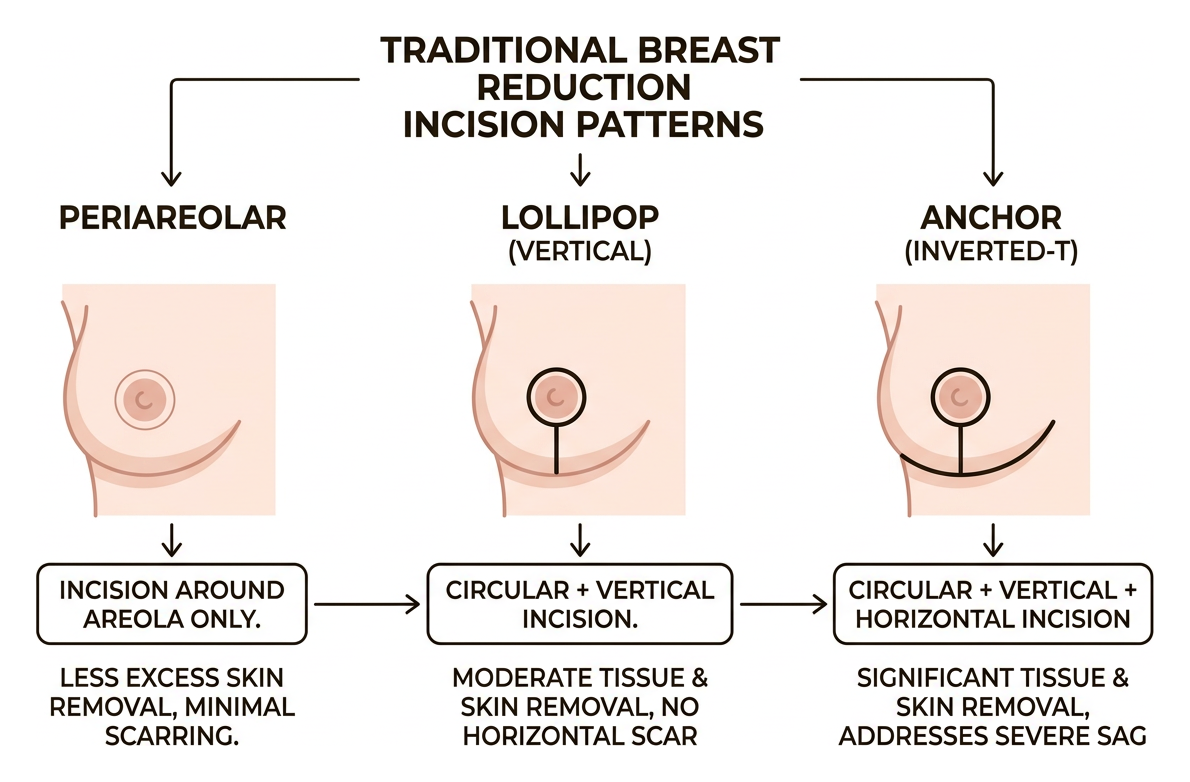
The most common traditional patterns include:
- The Anchor Incision (Inverted-T): This is the classic technique used for larger reductions. The incision goes around the edge of the areola, vertically down to the breast crease, and horizontally along the crease underneath.
- The Lollipop Incision (Vertical Mammoplasty): This technique uses two incisions: one around the areola and one running vertically down to the crease. It avoids the horizontal scar along the bottom crease, making it a popular choice for moderate reductions.
During these surgeries, protecting the blood supply to the nipple and breast tissue is paramount. The internal mammary artery supplies approximately 60 percent of the breast parenchyma, mainly feeding the medial portion. Meanwhile, the lateral thoracic artery supplies approximately 30 percent of the breast parenchyma, primarily supporting the superior, outer, and lateral portions. A skilled surgeon must carefully preserve these vascular networks to ensure healthy healing. For a comprehensive medical review of these anatomical considerations, you can refer to the clinical guide on Breast Reduction – StatPearls – NCBI Bookshelf.
Liposuction-Only and Scarless Alternatives
For patients who do not require a massive reduction or extensive skin tightening, modern medicine offers incredible scarless alternatives. Liposuction-only breast reduction is a revolutionary, low-impact option that achieves beautiful results without traditional, long surgical scars.
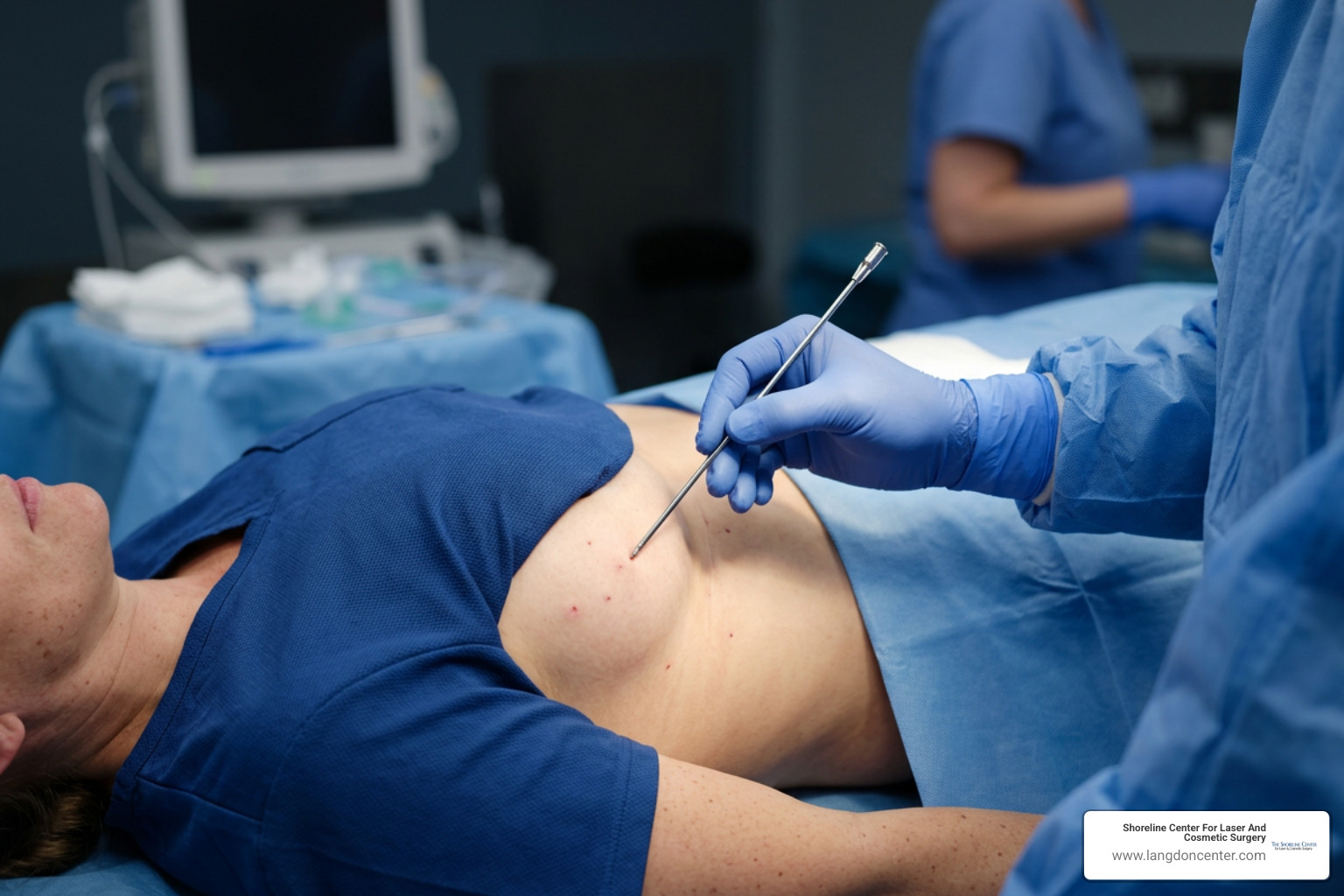
During a breast liposuction procedure, we make tiny, freckle-sized punctures and insert a thin liposuction cannula. We then perform precise tissue extraction, targeting the excess fat deposits within the breast. This technique is highly effective because a significant portion of breast volume is made up of fat, especially in post-menopausal women.
The benefits of this approach are immense:
- Minimal Scarring: Because there are no large incisions, there are no visible surgical scars.
- Quicker Recovery: Operating under local anesthesia means you avoid the risks and grogginess of general anesthesia, allowing you to return to your normal routine much faster.
- Excellent Results: The skin naturally contracts and tightens over the newly contoured breast shape.
To see if this low-impact approach is right for you, read about Scar-less Breast Reduction at The Langdon Center in Guilford CT. You can also explore our regional guide on Scarless Breast Reduction Connecticut or learn more about the specifics of Breast Lipo Reduction.
Preparing for Your Surgery and Understanding the Risks
Your safety and comfort are our top priorities. Proper preoperative guidelines and a thorough medical evaluation ensure that you are fully prepared for a smooth surgery and an easy recovery.
Preoperative Preparation and Candidacy
Preparation begins weeks before your actual surgery date. During your initial consultation, we will assess your overall health, take detailed measurements, and discuss your goals to determine if you are a good candidate.
Key steps in your preparation include:
- Mammogram Screening: We require a baseline mammogram for patients over a certain age or those with a family history of breast cancer to ensure no underlying issues exist before surgery.
- Smoking Cessation: You must completely stop smoking and using all nicotine products for at least six weeks before and six weeks after surgery. Nicotine severely constricts blood vessels, which can cause serious wound healing complications.
- Medication Adjustments: You will need to temporarily stop taking blood-thinning medications, including aspirin, ibuprofen, and certain herbal supplements, for at least one to two weeks before surgery to reduce the risk of bleeding.
Are you wondering if this procedure is the right path for you? Learn more by reading Am I a Candidate for a Breast Reduction?. For additional clinical preparation guidelines, check out the Breast reduction surgery – Mayo Clinic.
Potential Risks and Complications
Like any surgical procedure, breast reduction carries some potential risks. Understanding these risks helps you make an informed decision and ensures you know what to watch for during your recovery.
Some of the potential risks include:
- Wound Healing Issues: Delayed healing can sometimes occur, particularly where incisions meet (such as the T-junction in anchor incisions).
- Asymmetry: While we strive for perfect symmetry, minor differences in breast size, shape, or nipple height can occur as the tissues heal and settle.
- Nipple Sensation Changes: You may experience temporary numbness or increased sensitivity in your nipples. For most patients, normal sensation returns within a few months, though permanent changes are a small risk.
- Surgical Scars: Traditional techniques will leave permanent scars, though they fade significantly over the first year.
It is also important to note that a body mass index (BMI) over 30 is a recognized risk factor for postoperative complications after reduction mammoplasty, including wound separation and infection.
If scarring is a major concern for you, we encourage you to read our detailed discussion on Breast Reduction Surgery Always Leave Scars? and discover your options in Can I Get a Breast Reduction Without Scars?.
The Recovery Process and Long-Term Results
Healing is a gradual journey that requires patience, rest, and close adherence to postoperative care instructions. By taking care of your body during this phase, you ensure the best possible long-term aesthetic and physical results.
What to Expect During Recovery
Immediately after surgery, you will need to rest and allow your body to begin healing. We will provide you with a specialized, supportive surgical bra to wear day and night. This bra minimizes swelling, supports your new contours, and keeps your dressings secure.

During the initial recovery phase, you may have temporary surgical drains placed to collect excess fluid and prevent swelling. We typically remove these surgical drains when the fluid output is less than 30 mL in a 24-hour period.
Most patients can return to light, daily activities and desk work within one to two weeks. However, you must limit strenuous physical activity, heavy lifting, and vigorous exercise for four to six weeks to protect your healing tissues.
For a realistic timeline of your healing journey, read our guide on How Long is Recovery from a Breast Reduction? and check out these highly helpful 3 Tips for Breast Reduction Recovery.
Long-Term Results and Breastfeeding Considerations
The physical and aesthetic results of your breast reduction are generally permanent. Once the heavy tissue is removed, it will not grow back. However, your breasts can still change over time due to natural aging, gravity, significant weight fluctuations, or future pregnancies.
If you are planning to have children in the near future, we often recommend postponing your surgery. Pregnancy and breastfeeding can significantly alter the size, shape, and skin elasticity of your breasts, which could compromise your surgical results.
Additionally, future breastfeeding ability is an important factor to consider. While many women successfully breastfeed after a reduction, certain traditional surgical techniques that detach the nipple-areola complex can make breastfeeding more challenging. If preserving the ability to breastfeed is a priority for you, we can design a surgical plan that keeps the milk ducts and blood supply fully intact.
To see the beautiful, lasting transformations our patients have achieved, browse our No Scar Breast Reduction Gallery.
Cost, Insurance, and Financial Planning
One of the first questions patients ask is about the financial aspect of the procedure. The total cost of a breast reduction varies based on the surgical technique used, the complexity of the procedure, facility fees, and the type of anesthesia selected.
Because large breasts often cause documented medical symptoms (such as chronic back pain, nerve compression, and skin infections), many PPO insurance plans will cover the surgery if it is deemed medically necessary.
To qualify for insurance coverage, your insurance provider will review your medical history and physical measurements. Many insurance companies use a clinical tool called the Schnur scale to determine the minimum amount of breast tissue that must be removed relative to your total body surface area to qualify for coverage.
We can help you navigate this process by documenting your physical symptoms and submitting the required paperwork to your insurance provider. To learn more about pricing and coverage criteria, read How Much is a Breast Reduction? and find out Will Insurance Cover My Breast Reduction?.
Frequently Asked Questions about Breast Reduction
We believe that an informed patient is a happy, confident patient. Here are answers to some of the most common questions we hear at our Connecticut locations.
How long does the surgery take?
The procedure duration typically ranges between 2 to 5 hours. The exact time depends on the complexity of your surgery, the volume of tissue being removed, and whether we are using traditional incision methods or modern, scarless liposuction techniques. To understand what factors influence the surgical timeline, read How Long Does a Breast Reduction Surgery Take?.
Will I have permanent scars?
Yes, traditional surgical techniques will leave permanent scars. However, these scars are strategically placed in natural creases and around the areola where they can easily be hidden by swimwear or undergarments. Over the course of the first year, your scars will fade significantly, turning from pink and raised to soft, flat, and pale. If avoiding scars is your top priority, our scarless liposuction-only technique may be the perfect alternative.
Am I too young for the procedure?
Breast reduction can be performed at almost any age, but we generally recommend waiting until breast development is fully complete, which typically occurs by the late teens. If a young patient is experiencing severe, debilitating physical pain, the surgery can be performed earlier with parental consent. However, if the breasts continue to grow after the procedure, a secondary touch-up surgery may be needed later in life. Learn more by reading Am I Too Young for Breast Reduction?.
Conclusion
Living with the physical pain and emotional burden of overly large breasts is not something you have to endure. At Shoreline Center for Laser and Cosmetic Surgery, we are proud to offer advanced, compassionate care to patients across Connecticut, including Guilford CT, New Haven CT, Madison CT, Branford CT, and Hartford CT.
Our practice is founded on the philosophy of providing safer, low-impact procedures that deliver beautiful, natural results. By utilizing advanced local anesthesia techniques, we can often perform highly effective breast reductions with significantly less downtime, a faster recovery, and a lower risk profile than traditional hospital-based surgeries.
Whether you are seeking a traditional reduction to find relief from chronic back pain or are interested in our cutting-edge scarless liposuction-only options, we are here to guide you every step of the way. Contact us today to schedule your personalized consultation at our Guilford office, and let us help you restore balance, comfort, and confidence to your life. To take the first step, visit our main page on Breast Reduction.


