


Step-by-Step Guide to PRP Restoration
September 27, 2026
PRP Restoration: A Natural Approach to Thinning Hair
PRP restoration uses a small sample of your own blood to create a platelet-rich concentrate that is injected into areas of scalp thinning. For the best chance of benefit, start with a hair-loss evaluation, complete an initial series of treatments, and plan maintenance visits because results are gradual and need ongoing support.
PRP may help reduce shedding and improve the thickness and density of existing hair when follicles are still active. It is most often used for early male or female pattern hair loss, often alongside proven options such as minoxidil or, when appropriate, prescription medication. It is not a reliable way to regrow hair in areas where follicles have been inactive for a long time.
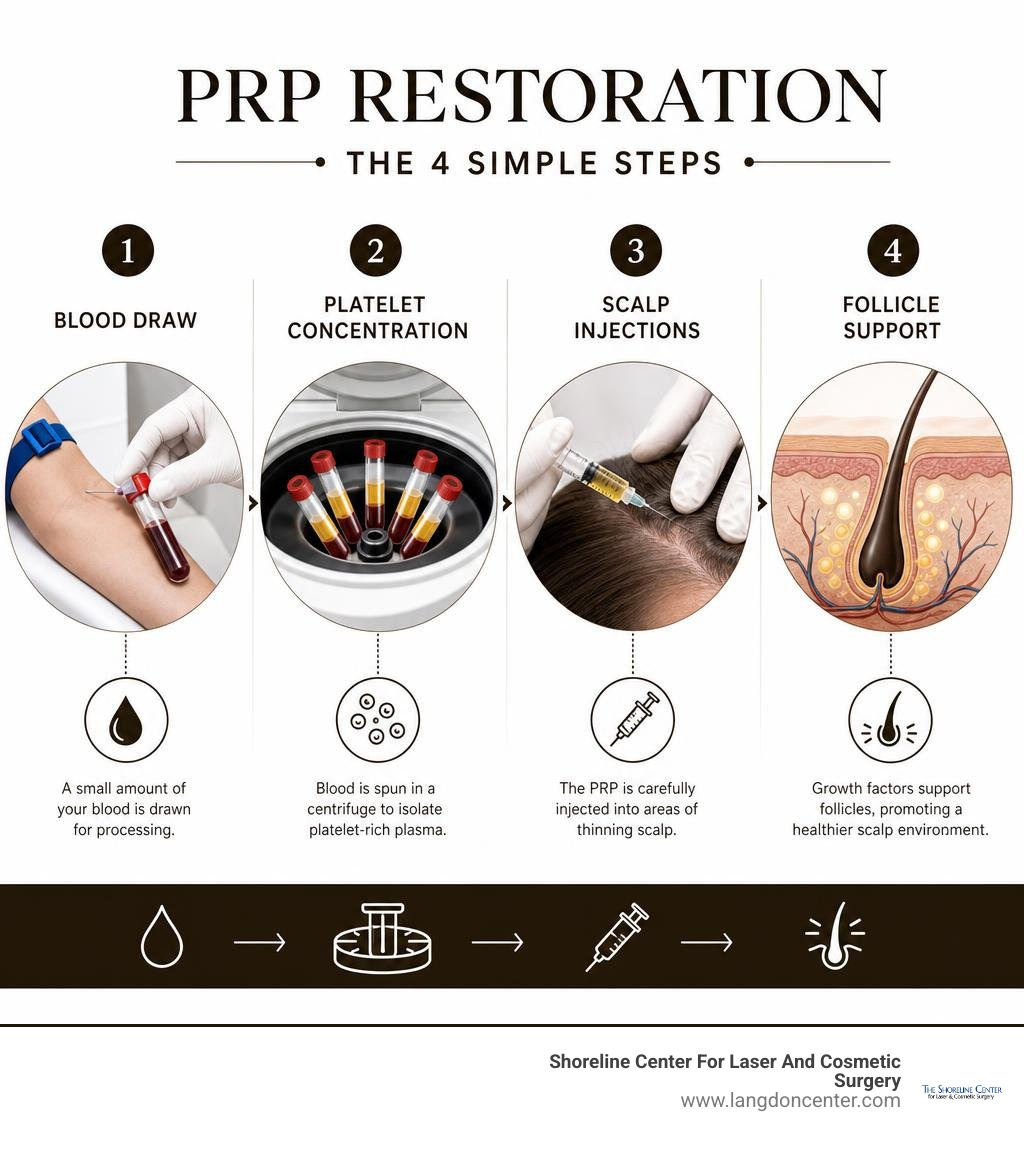
The process is straightforward: blood is drawn, spun in a centrifuge to concentrate platelets and their growth factors, then carefully injected into thinning scalp areas. Studies suggest some people see meaningful improvement, but outcomes vary because PRP preparation methods, hair-loss causes, and individual biology differ.
Dr. Joseph Sarhan is a Yale-trained, board-certified dermatologist with focused training in hair loss and minimally invasive cosmetic care. His MD and PhD background supports a careful, evidence-based approach to PRP restoration and follow-up care.
Understanding PRP Restoration and How It Works
Platelet-rich plasma therapy relies on your body’s innate healing system. Human blood consists of red blood cells, white blood cells, plasma, and platelets. While platelets are best known for clotting, they are packed with biochemical messengers called growth factors. When these platelets are isolated and concentrated, they create a solution rich in vascular endothelial growth factor (VEGF), fibroblast growth factor (FGF), and epidermal growth factor (EGF).
The primary goal during PRP preparation is to achieve a platelet concentration roughly 2 to 6 times higher than your baseline level. Once reintroduced to the scalp, these concentrated growth factors may support tissue repair, cellular renewal, and circulation around undernourished follicles. Learning what are the benefits of platelet rich plasma PRP helps clarify why this autologous approach has gained widespread popularity across modern regenerative medicine.
The Science Behind Platelet-Rich Plasma Therapy
Hair follicles undergo a continuous biological cycle consisting of growth (anagen), transition (catagen), and rest (telogen). In conditions like androgenetic alopecia, hair follicles experience progressive miniaturization. Hair shafts become progressively finer, shorter, and less visible until the follicle stops producing hair entirely.
PRP may help counter this miniaturization process by encouraging follicles to remain in the active anagen growth phase for longer durations. Local growth factors may support microcirculation in the surrounding scalp tissue, helping deliver oxygen and nutrients to weakened follicles. This support can help preserve active follicles and improve the diameter of individual hair shafts (Gentile et al., 2015). For patients curious about other regenerative applications, discovering where can platelet rich plasma PRP be used showcases how this therapy is used in other areas of regenerative medicine.
Ideal Candidates for PRP Restoration
PRP produces its best results when applied to living, active hair follicles that have begun to weaken rather than areas of complete, long-standing baldness. It is estimated that roughly 35 million men in the United States face male pattern baldness, and millions of women deal with diffuse thinning.
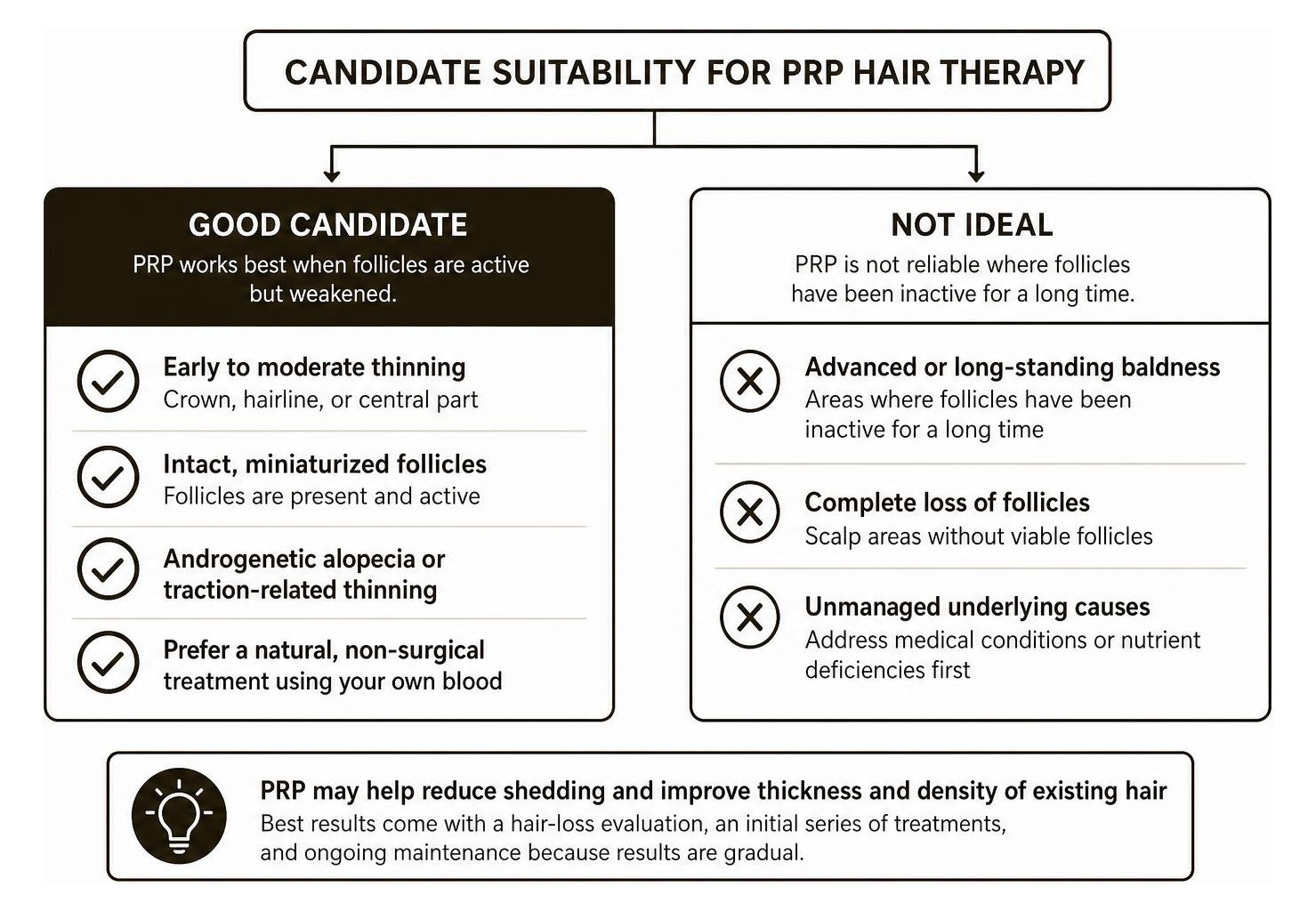
You are generally considered an excellent candidate for PRP therapy if you:
- Notice early to moderate thinning across the crown, hairline, or central part.
- Maintain areas with intact, miniaturized hair follicles.
- Suffer from androgenetic alopecia or traction-related thinning.
- Prefer a natural, non-surgical treatment that uses your own biological material.
- Understand that hair regrowth requires multiple sessions and ongoing maintenance.
If you are wondering, “Am I a candidate for hair restoration with PRP?”, a personalized clinical scalp evaluation remains the most dependable first step. The scalp can be examined under magnification to evaluate follicle viability and discuss underlying triggers outlined in the comprehensive guide to Hair Loss.
The Step-by-Step Clinical Procedure
PRP therapy is typically a smooth, in-office experience that takes under an hour from start to finish. Local numbing and gentle techniques can help keep patients comfortable throughout each stage.

Step 1: Blood Draw and Centrifugation
The session begins with a standard, gentle blood draw from your arm, usually collecting between 18 and 60 milliliters of whole blood into specialized sterile tubes containing an anticoagulant.
The collected blood is placed immediately into a calibrated centrifuge. The device spins at controlled speeds to separate whole blood into its distinct layers: dense red blood cells at the bottom, platelet-poor plasma (PPP) near the top, and a rich “buffy coat” containing concentrated platelets and healing white blood cells. By isolating this concentrated layer, clinicians gather the growth factors intended to support weakened follicles. This cellular regeneration process shares foundational similarities with how other regenerative treatments function, as detailed in the educational piece on what is a stem cell.
Step 2: Scalp Preparation and Injection Technique
Once the PRP is prepared, the scalp is cleaned and sanitized. A local anesthetic or topical numbing solution may be applied to minimize discomfort during treatment.
Using an ultra-fine 30-gauge needle, the clinician administers precise micro-injections into the subdermal layer of the scalp at a depth of approximately 1.5 to 2.5 millimeters, spacing each injection across thinning regions. In select cases, combining injections with scalp microneedling may enhance solution distribution across broader target areas, a technique explored in detail in the breakdown of the Benefits Microneedling with PRP.
Pre-Care, Post-Care, and What to Expect
Preparing for PRP is simple and straightforward:
- Hydrate well: Drink plenty of water before your appointment to make the blood draw smooth and easy.
- Pause anti-inflammatory medications: Ask your clinician whether you should avoid NSAIDs, such as ibuprofen, naproxen, and aspirin, before treatment. Medication guidance should be individualized.
- Eat a light meal: Having a small meal or snack beforehand can help prevent lightheadedness during blood collection.
After treatment, downtime is typically minimal. You may experience mild scalp tightness, tenderness, or slight redness for 24 to 48 hours. Most people can return to normal daily routines right away, though strenuous workouts and hot saunas may need to be avoided for 24 hours. Gentle hair washing is often appropriate the following morning with a mild shampoo.
Treatment Schedules, Results, and Alternative Therapies
Regenerating hair is a gradual biological journey. Because hair follicles rest and grow in staggered phases over several months, a single session cannot address all follicles simultaneously.
Recommended Session Schedules for PRP Restoration
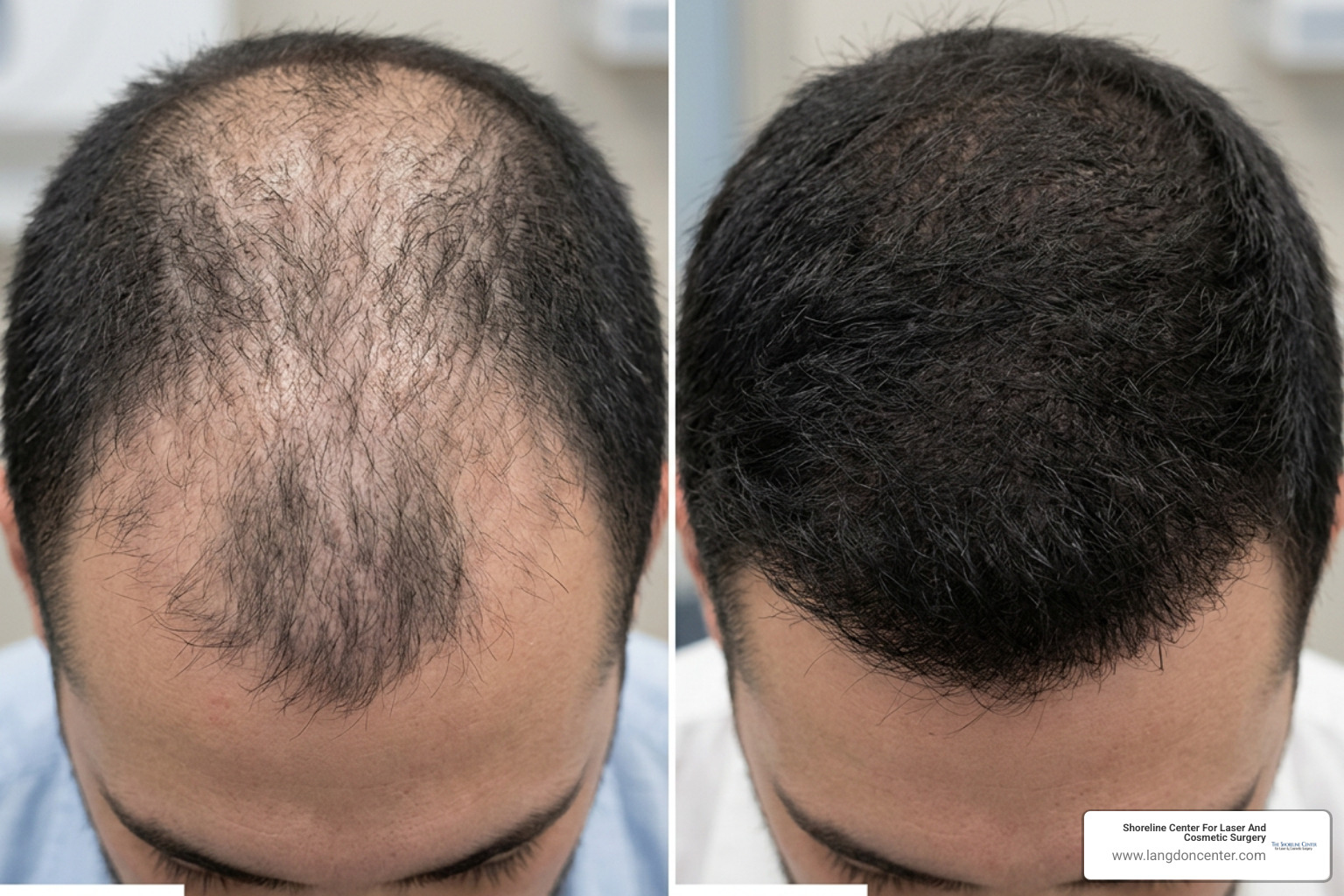
A common clinical protocol includes an initial series of three treatment sessions spaced four weeks apart. This introductory cycle is intended to support weakened follicles and encourage hairs to remain in the active growth phase.
Maintenance needs vary. Some patients schedule a booster session every 6 to 12 months to help maintain their results. Outcomes differ from person to person, but some patients notice reduced shedding and improved strand caliber. Because androgenetic hair loss is an ongoing genetic process, periodic follow-up can help guide a longer-term treatment plan.
PRP vs. Topical and Oral Hair Loss Options
PRP may be used as a standalone therapy or combined with other non-surgical treatments. A multi-therapy regimen can be appropriate for some patients, depending on the cause and pattern of hair loss.
| Treatment Modality | Primary Mechanism | Best Used For | Typical Maintenance |
|---|---|---|---|
| PRP Injections | Concentrated autologous growth factors that may support follicle function | Thinning crowns, widening parts, early hair loss | Follow-up schedule varies |
| Topical Minoxidil | Helps prolong the active hair-growth phase | Generalized scalp thinning | Daily topical application |
| Oral Finasteride | Lowers dihydrotestosterone (DHT) | Male pattern baldness | Daily oral medication |
| Low-Level Laser Therapy | Uses light energy to support follicular cells | Adjunctive scalp therapy | 2 to 3 light sessions weekly |
When deciding what is the best method for hair restoration, a clinician can help determine whether PRP, medication, or a combined approach is appropriate for your goals and medical history.
Frequently Asked Questions About Platelet-Rich Plasma
How long does it take to see visible results from PRP?
Most patients notice a significant decrease in daily hair shedding within the first 1 to 2 months after beginning their series. Visible improvements in hair thickness, texture, and overall scalp coverage typically become apparent between 3 and 6 months, as newly stimulated hairs grow outward from the scalp (Gentile et al., 2015). Maximum density gains are generally evaluated between 6 and 12 months following the completion of your initial three-session series.
What happens if I stop getting PRP treatments?
Because androgenetic alopecia is driven by genetics and hormonal sensitivity, stopping PRP maintenance will cause your scalp to gradually revert to its natural pattern of thinning over time. The hair follicles will no longer receive the regular boost of concentrated growth factors and local circulation, meaning hair shedding will slowly resume its pre-treatment trajectory.
Is PRP therapy FDA-approved for hair loss?
The medical centrifuges and specialized collection tubes used to prepare PRP are cleared by the FDA for processing human blood. However, the application of PRP for hair loss is categorized as an “off-label” clinical procedure. Because PRP is an autologous biologic derived directly from your own body rather than a manufactured pharmaceutical drug, it is governed by clinical standards for cell therapies rather than conventional drug approval pathways.
Conclusion
Hair thinning does not have to be an inevitable reality. With modern advancements in autologous regenerative treatments, PRP therapy offers a minimally invasive option that may help support weakened follicles, reduce hair shedding, and improve the appearance of hair density.
At Shoreline Center for Laser and Cosmetic Surgery, the medical team provides thorough, personalized evaluations to create a customized hair-recovery plan aligned with each patient’s aesthetic goals. Serving patients across Connecticut, including Guilford, New Haven, Madison, Branford, and surrounding Shoreline communities, the practice emphasizes gentle techniques and natural-looking outcomes. Take the first step toward revitalizing your scalp by exploring dedicated PRP Hair Restoration options and scheduling a consultation with the team today.
References
Gentile P, Garcovich S, Bielli A, Scioli MG, Orlandi A, Cervelli V. “The Effect of Platelet-Rich Plasma in Hair Regrowth: A Randomized Placebo-Controlled Trial..” Stem cells translational medicine, 2015. PMCID PMC4622412.


