


The Complete Guide to Neck Lift Results and Procedure
September 24, 2026
What Is a Neck Lift and Why Do So Many People Consider It?
A neck lift is a cosmetic surgery procedure that removes excess skin and fat around the jawline and neck to create a firmer, more defined, and younger-looking profile. It is one of the most effective ways to address visible signs of neck aging that diet, exercise, and skincare simply cannot fix.
Quick answer: What does a neck lift do?
| What It Treats | How It Helps |
|---|---|
| Loose, sagging neck skin | Removes or tightens excess skin |
| Excess fat under the chin | Removes fat via liposuction or excision |
| Platysmal bands (vertical cords) | Tightens the underlying platysma muscle |
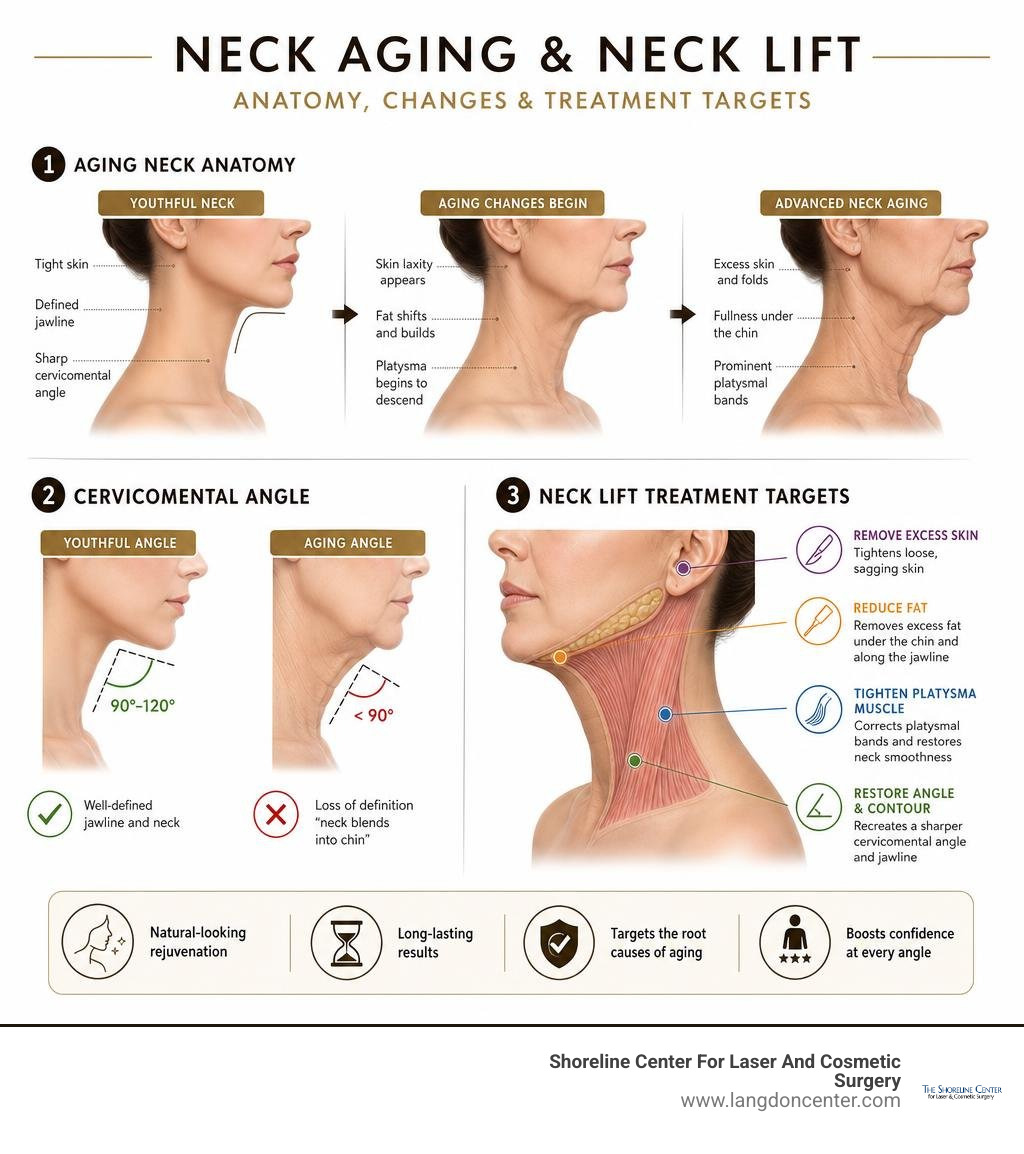
| Poorly defined jawline | Restores a sharper cervicomental angle |
| Jowls and facial sagging | Often combined with a facelift for full rejuvenation |
Neck aging happens gradually. The platysma muscle (a thin sheet of muscle just beneath the neck skin) begins to loosen over time. Fat shifts, skin loses elasticity, and the clean angle between the chin and neck starts to disappear. These changes can make a person look older or heavier than they feel, and they are notoriously resistant to non-surgical treatments alone.
Neck lift surgery, also called cervicofacial rhytidectomy or neck rejuvenation, addresses these changes at their root. It is currently the second most commonly performed facial cosmetic operation in the United States, following blepharoplasty (eyelid surgery). Estimates suggest between 160,000 and 400,000 neck lift procedures are performed annually in the US when counted both as standalone surgeries and as part of facelifts.
Dr. Joseph Sarhan is a Yale-trained, board-certified dermatologist with specialized training in facial rejuvenation and minimally invasive cosmetic procedures, including neck lift techniques. His MD + PhD background and hands-on training at Yale-New Haven Hospital support a science-based, individualized approach to safe, natural-looking neck rejuvenation.
Understanding the Neck Lift Procedure and Techniques
When considering a neck lift, it is important to realize that there is no single, one-size-fits-all approach. Every neck is unique, so surgical strategies should be customized to the patient’s anatomy, skin quality, and aesthetic goals.
Historically, early 20th-century cosmetic surgeons kept their lifting techniques highly secret due to negative public attitudes toward aesthetic surgery. Those early procedures relied on simple skin excision, which often led to a pulled, unnatural look. Today, modern techniques focus on manipulating the deeper structural layers of the neck to achieve beautiful, long-lasting results. More background is available in the Cervicofacial Rhytidectomy research published by StatPearls.
To determine the most effective approach for each patient, surgeons often look at the Dedo classification system. This clinical tool categorizes aging neck changes into six distinct progressive stages:
- Class I (Normal): A well-defined cervicomental angle, good skin elasticity, and no excess fat or muscle weakness.
- Class II (Skin Laxity): Mild skin sagging without significant fat accumulation or muscle banding.
- Class III (Submental Fat): Localized fat accumulation under the chin, often seen as a double chin, with otherwise good skin tone.
- Class IV (Platysmal Banding): Visible vertical cords in the neck caused by loose muscle edges.
- Class V (Skeletal Retrognathia): A receding jawline or chin structure that naturally limits the sharpness of the neck angle.
- Class VI (Low-lying Hyoid Bone): A lower anatomical position of the hyoid bone, which naturally creates a more obtuse neck angle.
Identifying the appropriate classification helps determine the right procedure, whether that means a simple, minimally invasive approach or a comprehensive Surgical Neck Lift.
Liposuction and the No-Scar Neck Lift
For younger patients who present with localized submental fat but still possess excellent skin elasticity, a highly invasive surgery is rarely necessary. In these cases, a No-Scar Neck Lift may be recommended.
This technique relies on submental liposuction performed through tiny, well-hidden punctures. Using a specialized micro-cannula, the surgeon gently removes stubborn fat deposits that obscure the jawline. Because the cannula opening is kept away from the dermis, the delicate skin layer is protected and the risk of postoperative skin-texture irregularities is reduced.
At Shoreline Center for Laser and Cosmetic Surgery, this procedure is performed under local anesthesia. This is a central part of the practice philosophy. Avoiding general anesthesia can reduce certain surgical risks, avoid the grogginess and nausea often associated with it, and support a quicker recovery.
Deep Plane and Extended Neck Lift Options
For patients with more advanced signs of aging, such as severe skin laxity and prominent platysmal bands, surface-level treatments are not enough. The deeper structural layers, specifically the platysma muscle and the superficial musculoaponeurotic system (SMAS), may need to be addressed.
During a deep plane or extended neck lift, discreet incisions are made around the ears and under the chin. This allows for a platysmaplasty, in which the loose medial borders of the platysma muscle are sutured back together, much like tightening a corset. The deeper tissues are then lifted and secured to the mastoid periosteum behind the ear. This structural elevation can restore a sharp, youthful cervicomental angle, which is ideally between 90 degrees and 105 degrees.
For significant sagging in both the lower face and neck, combining these techniques can yield more harmonious results. Learn more about natural-looking outcomes with Deep Plane Facelifts & Necklifts in Guilford, CT.
Ideal Candidates and Key Anatomical Considerations
An ideal candidate for a neck lift is someone in good overall health, a non-smoker, and someone with realistic expectations about what surgery can achieve. A successful outcome also relies heavily on a surgeon’s mastery of neck anatomy.
The neck contains delicate muscles, blood vessels, and nerves. During any neck rejuvenation procedure, surgeons pay close attention to several critical anatomical landmarks to protect these structures and reduce complication risk. More information is available in the Neck Rejuvenation anatomy guidelines.
- The Great Auricular Nerve (GAN): This is the most commonly injured nerve during a facelift or neck lift. It provides sensation to the lower earlobe and surrounding skin. To avoid damaging it, surgeons locate it at McKinney’s point, which is consistently found one-third of the distance from the mastoid tip to the clavicular head of the sternocleidomastoid muscle. Injury to this nerve can result in permanent numbness or hypersensitivity.
- The Marginal Mandibular Nerve: This motor nerve branch controls the muscles that depress the lower lip. It runs below the inferior margin of the mandible in about 20 percent of patients and above it in the other 80 percent. Injury to this nerve can lead to an asymmetric smile where the lower lip cannot pull down properly on the affected side.
- The Cervical Branch of the Facial Nerve: This nerve occasionally shares a common trunk with the marginal mandibular nerve. It lies roughly 1 centimeter below the midpoint of a line drawn between the chin and the mastoid tip.
- Pitanguy’s Line: This imaginary line runs from the tragus to a point 1.5 centimeters above the lateral eyebrow and helps surgeons map and avoid the frontal branch of the facial nerve.
By staying in precise, safe tissue planes, surgeons can protect these vital structures while delivering a beautifully contoured result.
Facelift vs. Neck Lift: When to Combine Them
A common question is whether a facelift, a neck lift, or both procedures may be appropriate.
The answer depends on where aging concerns are concentrated. A standalone neck lift can be a good option when the primary concerns are below the jawline, such as a double chin, vertical neck bands, or a “turkey neck” of loose skin.
However, sagging jowls, deep folds around the mouth, or volume loss in the cheeks may create an aesthetic mismatch after a neck lift alone. The neck may look more youthful while the lower face continues to show signs of gravity.
In these cases, a combined cervicofacial rhytidectomy may be recommended. Combining the procedures can lift the jowls and redefine the entire jawline in one cohesive surgery, helping create a balanced, natural appearance. Learn more about how these procedures complement each other in this article on how to Rejuvenate Your Neck and Jowl Area with a Neck Lift.
Preparing for Surgery and the Recovery Timeline
Proper preparation is the foundation of a smooth surgery and a rapid recovery. Patients who schedule a neck lift at the Connecticut practice receive comprehensive preoperative instructions.
First and foremost, nicotine cessation is non-negotiable. Anyone who smokes or uses nicotine products must stop at least 2 to 4 weeks before surgery and remain nicotine-free for at least 4 weeks afterward. Nicotine constricts blood vessels, severely impairing blood perfusion to the healing skin flaps. Clinical data shows that the skin sloughing (tissue death) rate in smokers undergoing rhytidectomy is 7.5 percent, compared to just 2.7 percent in non-smokers.
Patients must also discontinue aspirin, ibuprofen, fish oil, and other blood-thinning supplements at least two weeks prior to surgery, unless their prescribing clinician advises otherwise. This can reduce the risk of a postoperative hematoma, which is the most common complication following a neck lift and occurs in 0.2 percent to 8 percent of cases. Keeping blood pressure strictly controlled before and after surgery is also important for reducing bleeding under the skin.
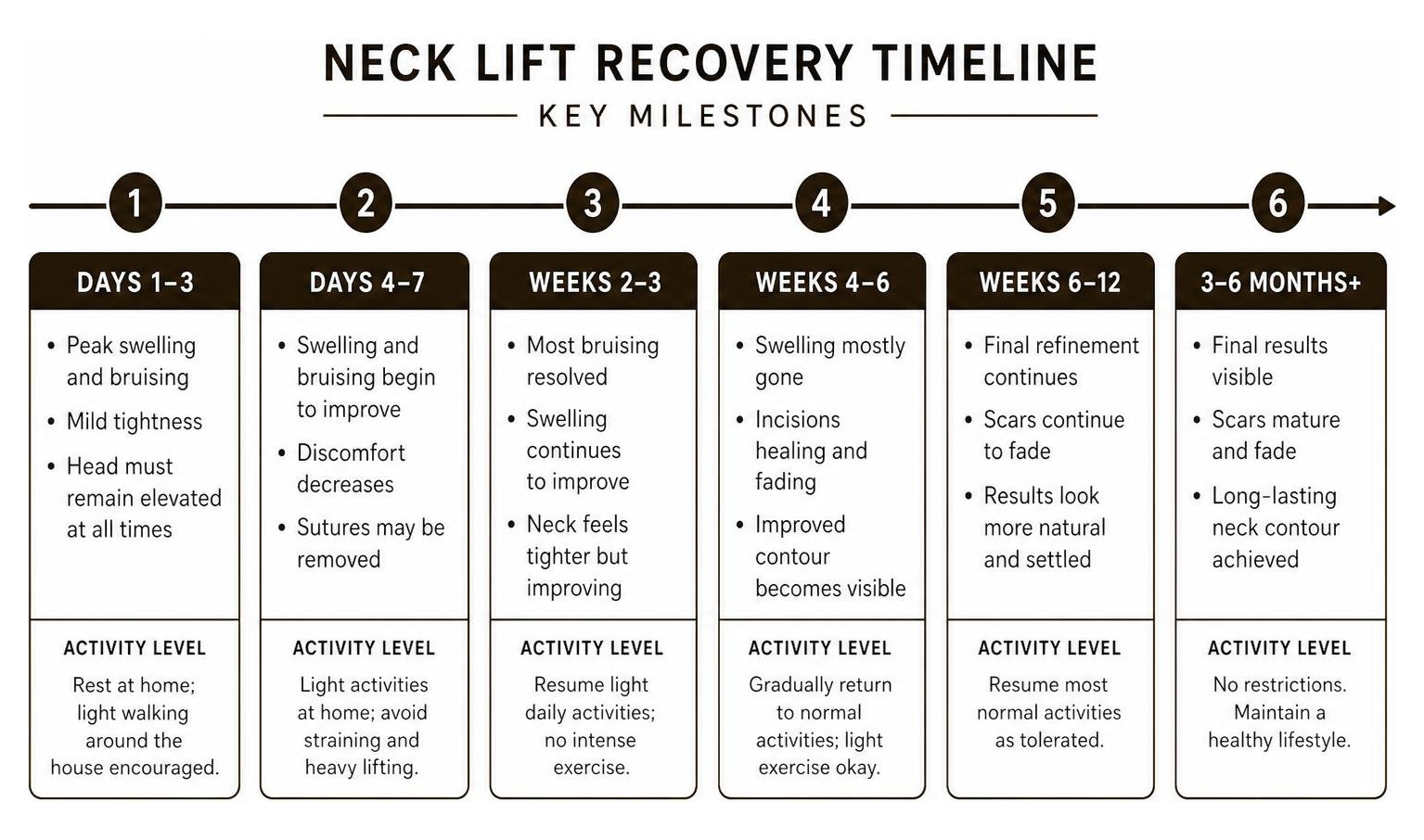
To help with planning, here is what a typical recovery timeline looks like:
| Recovery Milestone | What to Expect | Activity Level |
|---|---|---|
| Days 1 to 3 | Peak swelling and bruising; mild tightness; head must remain elevated at all times. | Rest at home; light walking around the house is encouraged. |
| Week 1 | Swelling begins to subside; sutures under the chin and around the ears are removed. | Gentle, non-strenuous daily activities; no bending over or lifting. |
| Week 2 | Most bruising fades; many patients feel comfortable returning to work. | Can resume light desk work; continue wearing your compression garment as directed. |
| Month 1 | Swelling is 80 percent gone; incision lines begin to transition from pink to flat. | Can gradually resume light exercise; avoid heavy lifting or high-impact workouts. |
| Months 3 to 6 | Final contours become visible; residual minor numbness resolves. | Full clearance for all physical activities; diligent sun protection is required. |
It is also worth noting that up to 30 percent of patients experience mild postoperative depression during the first couple of weeks. This can be a temporary reaction to the initial swelling, bruising, and natural fatigue of healing. As swelling fades and the new jawline emerges, these feelings often resolve. Real-world transformations are available in the Neck Lift Before & After Gallery.
Non-Surgical Alternatives for Neck Rejuvenation
For patients who are not ready for surgery, or who have very mild, early signs of neck aging, several non-surgical alternatives can offer subtle improvements.
- Botulinum Toxin (Botox): When vertical platysmal bands are the main concern, a qualified clinician can inject botulinum toxin directly into the muscle. Typical treatment may use 10 to 30 units per side, delivered in small doses across several sites. This temporarily relaxes the muscle and softens the bands. The treatment takes 1 to 2 weeks to reach full effect and lasts about 3 to 4 months.
- Laser Skin Resurfacing: This can improve skin texture and address fine lines. However, laser treatments on the neck carry a higher risk than on the face. The skin of the neck is incredibly thin, averaging just 0.25 millimeters in thickness compared to over 1.0 millimeter on the cheeks. It also has far fewer dermal appendages, such as hair follicles and sweat glands, which means it heals more slowly and can be susceptible to scarring, burns, or pigment changes if laser settings are too aggressive.
Frequently Asked Questions About Neck Lifts
How much does a neck lift cost?
The cost of a neck lift varies widely based on several factors, including the specific surgical technique used, the surgeon’s experience, and the geographic location of the practice. Standalone liposuction will naturally cost less than a comprehensive deep plane neck lift that requires muscle tightening.
Because procedures at Shoreline Center for Laser and Cosmetic Surgery are performed under local anesthesia in comfortable Connecticut offices, patients may be able to avoid some hospital fees and general-anesthesia costs. For a detailed breakdown of the financial investment, review the guide on How Much Does a Neck Lift Cost?.
What are the main risks of a neck lift?
Like any surgical procedure, a neck lift carries some risks. The most common complication is a hematoma (a collection of blood under the skin), which occurs in 0.2 percent to 8 percent of cases and may require a quick, simple drainage procedure.
There is also a minor risk of temporary or permanent nerve injury, with a reported incidence of 0.7 percent to 2.5 percent. This most commonly affects the great auricular nerve, causing temporary earlobe numbness.
Other rare risks include infection, delayed wound healing, and scarring. If a surgeon over-resects the fat under the chin too aggressively, it can cause a “cobra neck” deformity, which is an unnatural, hollowed-out depression. Conversely, pulling the skin too tightly near the ears can cause a “pixie ear” deformity, where the earlobe is pulled downward. Choosing an experienced, board-certified facial specialist is one of the best ways to minimize these risks.
How long do neck lift results last?
While a neck lift cannot stop the natural aging process, it effectively resets the clock. A well-performed surgical neck lift provides highly durable results, and many patients do not require a repeat procedure for 5 to 10 years.
The longevity of results depends on skin elasticity, genetics, and lifestyle. Results can be supported by maintaining a stable weight, avoiding smoking, and protecting neck skin from sun exposure with high-quality sunscreen.
Conclusion
At Shoreline Center for Laser and Cosmetic Surgery, neck rejuvenation should never look pulled, tight, or obvious. The goal is beautiful, natural-looking results that help patients look like refreshed, youthful versions of themselves.
The practice specializes in minimally invasive techniques performed under safe, comfortable local anesthesia to minimize downtime and support patient safety. Patients visiting from Guilford, New Haven, Madison, Branford, or other convenient Connecticut locations can receive guidance through every step of the aesthetic journey.
To learn more about customizable Surgical Neck Lift options and schedule a personalized consultation, contact Shoreline Center for Laser and Cosmetic Surgery today.


