Conditions Hair Hair Loss

Many people struggle with hair loss, which can be a significant source of distress and frustration. A healthy head of radiant hair can be the crowning feature of your appearance. Thin areas and bald spots, on the other hand, often lead to decreased confidence and feeling self-conscious. If you’re dealing with hair loss, it’s time to regain your hair and your confidence at The Shoreline Center.

How Much Hair Loss is Normal?

We all shed small amounts of hair daily. It can be difficult to tell how much shedding is normal and how much signifies a bigger problem. According to the American Academy of Dermatology, losing approximately 50-100 hairs a day is normal. 

You may experience more significant shedding after stressors, such as weight loss, childbirth, or illness. In this case, it is still considered shedding and not hair loss. An experienced cosmetic surgeon, Dr. Sarhan can help you distinguish between excessive shedding and true hair loss. While shedding is temporary and hair typically grows back on its own, hair loss indicates that the hair is no longer growing.

How much hair loss is normal?

Frequently Asked Questions

Hair loss, also called alopecia, is a fairly common condition with multiple possible causes. There are several types of hair loss, the most common of which is hereditary hair loss. This is called androgenic (or androgenetic) alopecia or “pattern” alopecia and includes female and male pattern baldness. Pattern baldness is genetically inherited and most often occurs gradually as you age, but it can also begin at puberty.

Genetics is the most common cause of hair loss, but other factors and conditions can contribute. Your health, stress, diet, and other lifestyle choices can worsen hereditary hair loss. For women, hair loss may result from hormonal changes during pregnancy or menopause. Sometimes, hair loss occurs from medical conditions or medications. Certain autoimmune disorders and infections can cause temporary or permanent hair loss.

Determining what’s causing your thinning or balding is the first treatment step. As an experienced cosmetic surgeon, Dr. Sarhan can help evaluate potential causes of your hair loss and recommend the appropriate treatment. Addressing the underlying issue may be necessary for non-hereditary hair loss, rather than focusing solely on the hair itself.

Depending on what’s causing your hair loss or thinning, Dr. Sarhan will help you determine the best treatment. Often, for androgenic alopecia, he prescribes oral medication such as finasteride or low-dose minoxidil. He may recommend one of the following procedural options to restore thicker, healthier hair.

FUE Hair Transplant

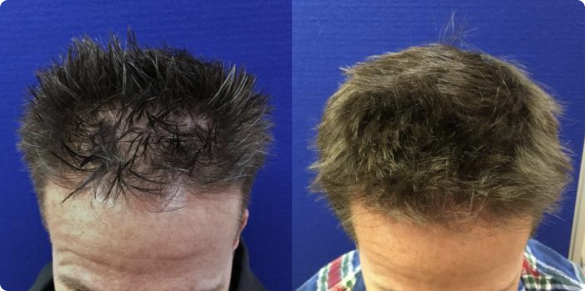
A surgical hair transplant is often the most effective solution for moderate to severe hair loss, particularly balding. This minimally invasive procedure transplants healthy follicles from an area that is still growing hair to the balding area. After a few months, hair starts growing from the transplanted follicles, with natural-looking results that are typically permanent.

PRP Hair Restoration

If you want a non-surgical option for healthier, more luscious hair, The Shoreline Center also offers PRP injections to stimulate new hair growth. PRP, or platelet-rich plasma, is extracted from your own blood and then injected into the scalp. The stem cells and growth factors in the PRP help improve blood flow and encourage healthy growth.

PRP injection procedures are simple and convenient. After an initial series of treatments, you can achieve long-lasting hair restoration with maintenance treatments every few months.

*Individual results may vary.

FUE Hair Transplant® results.

Take the next step.

To learn more about hair loss or to schedule your consultation with Cosmetic Surgeon Dr. Sarhan, please fill out the form on this page or call The Shoreline Center at (203) 453-8625. We look forward to working with you! The Shoreline Center serves patients in the Guilford & New Haven, CT areas.